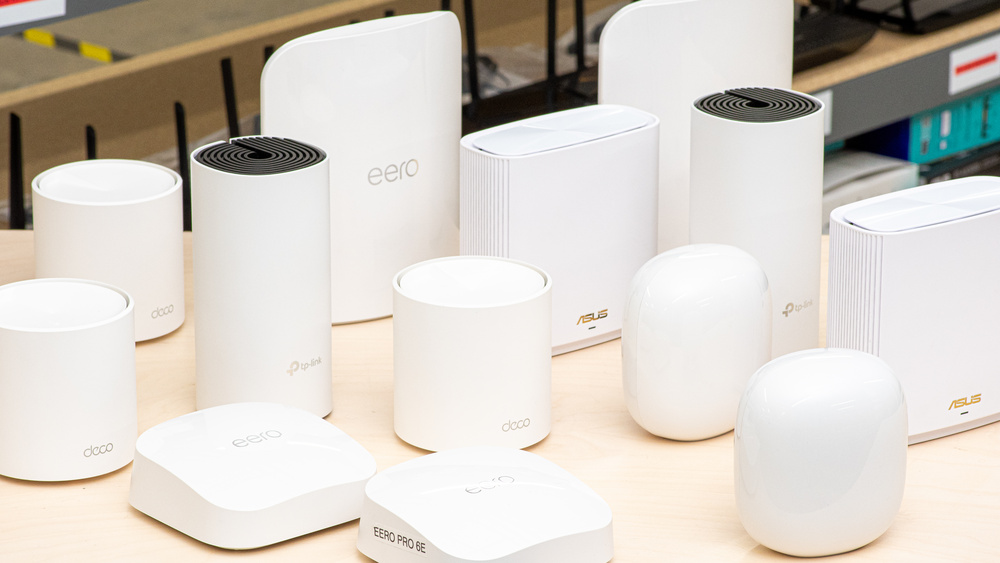
Bad Wi-Fi has a way of finding you at the worst time, right when the movie buffers, the game lags, or a video call freezes mid-sentence. If you’re shopping for the Top 5 Best Mesh WiFi Systems of 2026, the good news is that this year’s best picks are faster, smarter, and far better at covering large homes than old single-router setups.
Some are built for giant homes with fiber internet and a pile of connected devices. Others focus on simple setup, family controls, or strong value. Here’s how the five systems in this roundup compare, and which kind of home each one fits best.
What makes a mesh WiFi system worth buying in 2026
A mesh system works like a team instead of a solo act. Rather than asking one router to blast signal through every wall, floor, and hallway, a mesh kit spreads that job across multiple units. The result is broader coverage, fewer dead zones, and smoother handoffs as you move around the house with your phone, laptop, or TV.
That matters more than ever because homes are heavier on Wi-Fi than they used to be. Streaming boxes, gaming consoles, security cameras, smart speakers, and work laptops all compete for the same air. According to Wirecutter’s mesh networking recommendations, mesh systems often solve the problem that a single router can’t, especially when space and walls get in the way.
In 2026, the big features to watch are Wi-Fi 7 support, band design, wired backhaul, and port speed. Wi-Fi 7 brings more speed and better handling for busy networks. Tri-band and quad-band systems can also reduce traffic jams, especially when many devices are online at once. Meanwhile, a 2.5G or 10G port matters if you already have a fast internet plan, or if you move large files around your local network.
Setup also matters more than most people expect. A powerful router that feels like a science project gets old fast. The best systems here balance speed with an app that helps you get online quickly and stay in control without digging through a mess of menus.
A quick look at the five picks
Here’s the short version before the deeper breakdown.
| Rank | Mesh system | Wi-Fi class | Rated speed | Rated coverage | Best fit |
|---|---|---|---|---|---|
| 1 | NETGEAR Orbi 970 Series (RBE973S) | Wi-Fi 7, quad-band | Up to 27 Gbps | Up to 10,000 sq. ft. | Large homes, premium buyers |
| 2 | TP-Link Deco BE17000 | Wi-Fi 7, tri-band | Up to 17 Gbps | Up to 8,500 sq. ft. | Fast homes that want strong wired options |
| 3 | Tenda BE5100 | Wi-Fi 7, dual-band | BE5100 class | Up to 6,600 sq. ft. | Bigger homes that want solid coverage and simpler hardware |
| 4 | Amazon eero Pro 7 | Wi-Fi 7, tri-band | Supports plans up to 5 Gbps | Up to 2,000 sq. ft. | Easy setup and clean app experience |
| 5 | ASUS ZenWiFi BD4 (3-Pack) | Wi-Fi 7, dual-band | Up to 3,600 Mbps | Up to 6,500 sq. ft. | Families and smart homes |
The quick takeaway is simple. The fastest system here isn’t automatically the best one for every house.
Coverage, port selection, and ease of setup often matter as much as raw speed.
1. NETGEAR Orbi 970 Series is the premium pick for large homes
The NETGEAR Orbi 970 Series RBE973S sits at the top of this list because it goes after one thing without apology, maximum home network performance. This kit includes a router and two satellite extenders, and it’s clearly aimed at people who need broad, strong coverage across a large house, a multi-floor layout, or a busy home office setup.
The headline spec is huge, up to 27 Gbps, along with a quad-band design. On paper, that gives the Orbi 970 more room to keep devices from stepping on each other. In real-life terms, that means better odds of smooth 4K and 8K streaming, sharper gaming response, and less slowdown when several people are online at once. If your home network feels like a crowded highway at rush hour, quad-band hardware gives traffic more lanes.
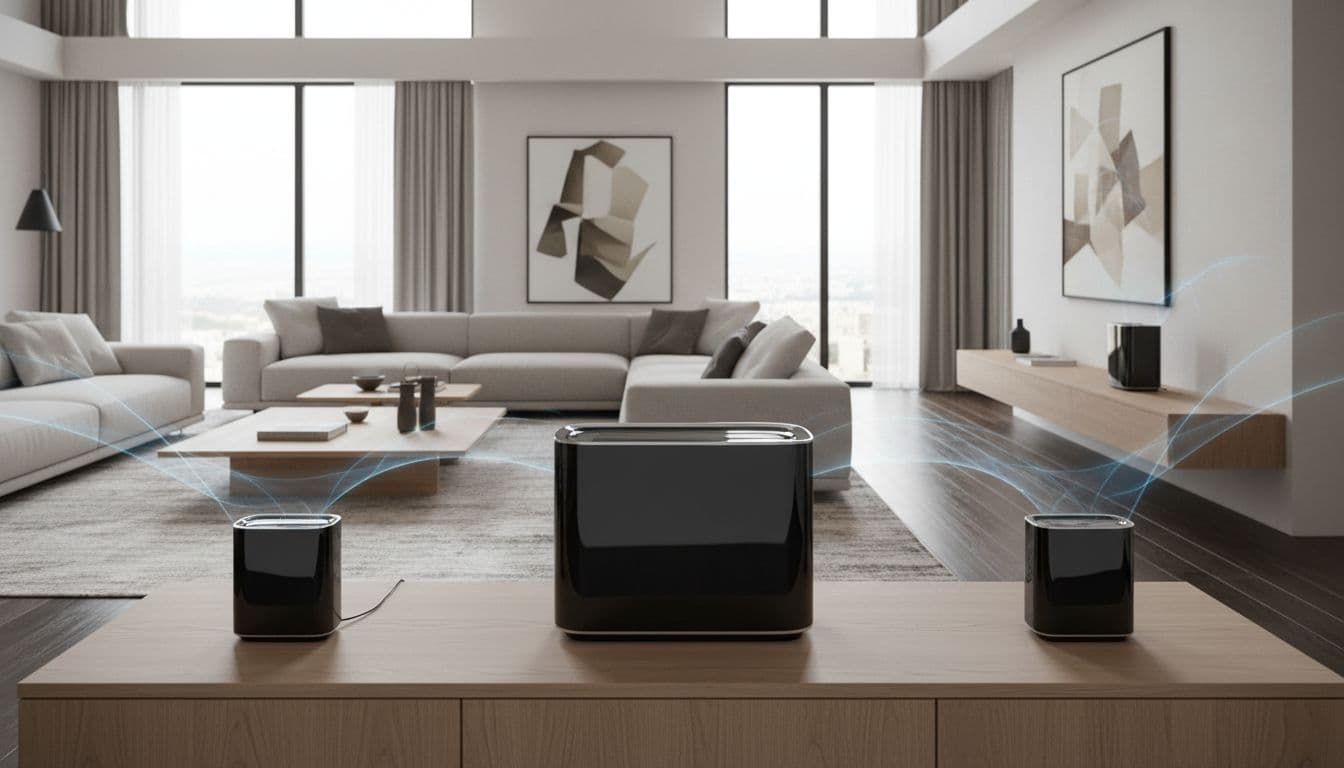
Coverage is another major reason this model lands first. It’s rated for up to 10,000 square feet, which is a massive number for a consumer mesh system. That makes it a strong fit for larger homes where one router would wave the white flag halfway down the hallway. The satellites are there to carry the signal deep into the house, not merely patch one weak room.
Security and ease of use also help its case. The built-in security features add peace of mind for smart-home households, and the app-based setup lowers the barrier to entry. You don’t need to be a network hobbyist to get it running.
Still, price is the catch. This is not the value pick. It’s the high-end pick for buyers who want speed, reach, and fewer compromises. If you want one of the most advanced mesh systems in this group, the Orbi 970 earns its place.
2. TP-Link Deco BE17000 blends speed with serious wired flexibility
The TP-Link Deco BE17000 is a strong second-place choice because it offers high-end Wi-Fi 7 performance without feeling locked into a one-size-fits-all setup. With speeds rated up to 17 Gbps and coverage up to 8,500 square feet, it’s built for households that want strong wireless coverage but also care about what happens on the wired side of the network.
That wired side is where this system gets especially interesting. The 10G RJ45/SFP+ combo port gives advanced users more room to grow, whether that means faster local transfers, a high-speed NAS, or a home network that’s ready for better internet service down the road. Add multi-gig wired backhaul, and the nodes can talk to each other with less delay and more consistency than a purely wireless setup.
That matters if your home is loaded with TVs, consoles, workstations, and smart gear. A tri-band design helps spread the load, while wired backhaul can keep performance steadier between nodes. The end result is a network that feels less fragile when everyone is online at the same time.
TP-Link also keeps the package approachable. Setup runs through the app, and the hardware has the kind of clean look that fades into the background instead of shouting for attention. That’s a small thing, but it matters when these units live on shelves, counters, and side tables.
If the Orbi 970 is the full-luxury option, the Deco BE17000 is the smart high-performance choice for buyers who want premium speed and stronger port options. For broader context on how tested mesh systems stack up across different homes, PCMag’s mesh system roundup is a useful companion read.
3. Tenda BE5100 offers broad coverage without chasing every top-end extra
The Tenda BE5100 won’t match the most expensive kits here on headline speed, but it makes a good case for itself where many people actually live, in regular homes that need better coverage, stable roaming, and less hassle. Rated for up to 6,600 square feet, it targets the common pain point of weak signal in bedrooms, back rooms, or the far side of the house.
This is a dual-band Wi-Fi 7 system, and that tells you a lot about its place in the lineup. It’s a bit leaner than the tri-band and quad-band options above it, but it still carries newer Wi-Fi 7 features, including MLO (Multi-Link Operation) and Ethernet backhaul. Those features help the system move traffic more reliably and reduce the kind of hiccups that make roaming from room to room feel clumsy.
Port selection is another plus. The mix of one 2.5G port and two 1G ports gives you room for a faster wired device without pretending to be a full-on prosumer setup. That’s a practical balance for homes with a gaming console, desktop PC, or a streaming hub that benefits from a cable instead of Wi-Fi.
The best part may be its ease of use. Setup is described as beginner-friendly, which matters because complicated networking gear often scares off the people who need it most. Tenda keeps the pitch simple: broad coverage, newer wireless tech, and a cleaner path to better home internet.
If your goal is strong whole-home Wi-Fi and you don’t need the flashiest spec sheet in the room, the BE5100 feels like a grounded, sensible pick.
4. Amazon eero Pro 7 is built for people who want speed without fuss
Amazon’s eero line has long leaned into simplicity, and the eero Pro 7 keeps that approach while stepping into Wi-Fi 7. It supports internet plans up to 5 Gbps, uses a tri-band design, and is rated for up to 2,000 square feet in the one-pack version listed in the video description. That number is lower than the multi-node systems above, but the product still makes sense for buyers who want a clean starting point with fast modern hardware.
The real appeal here is balance. You get enough speed for heavy streaming, gaming, and smart-home traffic, but you don’t have to wrestle with a complicated setup process to get there. The eero app has a reputation for making home networking feel less like wiring a server room and more like setting up a smart speaker. For many households, that ease alone is a major selling point.
Tri-band design also helps with device load. In a home where phones, tablets, TVs, speakers, and doorbells are always talking, spreading that traffic across three bands can keep the network feeling calmer. It won’t turn a small one-pack system into a mansion-wide solution, but it can make a meaningful difference inside the space it’s built to cover.
Price is still something to watch. The eero Pro 7 costs more than basic routers, so it needs to justify that premium through ease, stability, and newer Wi-Fi support. For people who want a polished mesh platform and don’t need 10,000 square feet of coverage, the Amazon eero Pro 7 listing is an easy one to keep on the shortlist.
5. ASUS ZenWiFi BD4 is a smart fit for families and connected homes
The ASUS ZenWiFi BD4 three-pack rounds out this list with a profile that feels practical and well judged. It doesn’t chase the wildest speed claims here, but it covers the basics that matter in everyday life, stable performance, good range, useful wired ports, and family-friendly controls that don’t feel like an afterthought.
This system is rated up to 3,600 Mbps and up to 6,500 square feet of coverage with the three-pack. That makes it a good option for larger homes that need several nodes working together. As a dual-band Wi-Fi 7 setup, it’s designed for modern use without pushing into the pricing tier of the most extreme premium kits.
Two details help it stand apart. First, the dual 2.5G ports add welcome flexibility for faster wired devices or newer internet plans. Second, ASUS includes Smart Home Master SSIDs, which can help separate and manage IoT devices more cleanly. If your home is full of smart plugs, speakers, lights, and cameras, that feature has real day-to-day value.
Security and parental controls also make this system appealing for families. Those tools won’t matter to every buyer, but for households with kids or lots of connected gear, they can matter just as much as raw throughput. That gives the BD4 a wider kind of usefulness than a speed-first router that ignores household management.
This is the mesh kit for people who want a steady all-around performer. It doesn’t try to overpower the room with specs. Instead, it covers the common needs of a busy home and does it with less fuss.
Which of these mesh WiFi systems is the best fit for you?
The answer depends less on rank and more on your house, your internet plan, and how you use the network every day. If you have a large home, heavy traffic, and fast broadband, the Orbi 970 and TP-Link Deco BE17000 make the strongest case. They offer the biggest coverage and the most headroom for demanding setups.
If you want better whole-home Wi-Fi without paying for every premium extra, the Tenda BE5100 and ASUS ZenWiFi BD4 look more approachable. Tenda leans into coverage and newer features at a simpler tier, while ASUS adds stronger family tools and flexible ports. The eero Pro 7, by contrast, is about ease. It’s the pick for buyers who want the setup to feel clean and quick, not technical.
For a broader market view beyond this list, WIRED’s best mesh Wi-Fi systems guide is helpful. It’s also worth comparing how each brand balances speed, app quality, and home layout, because those three things often shape satisfaction more than a peak spec on the box.
The right mesh system fixes more than speed
The best mesh Wi-Fi system doesn’t merely make your internet faster. It makes the whole house feel less frustrating, because the signal stops falling apart when you move from room to room.
That’s why the best pick for you may not be the most expensive one on the list. It’s the one that matches your space, your device load, and how much control you want after setup. When those pieces line up, your Wi-Fi finally stops being the problem in the house.