When a country’s internet drops to about 1% of normal, the silence is not only technical. It changes what people can see, what they can share, and how they can organize.
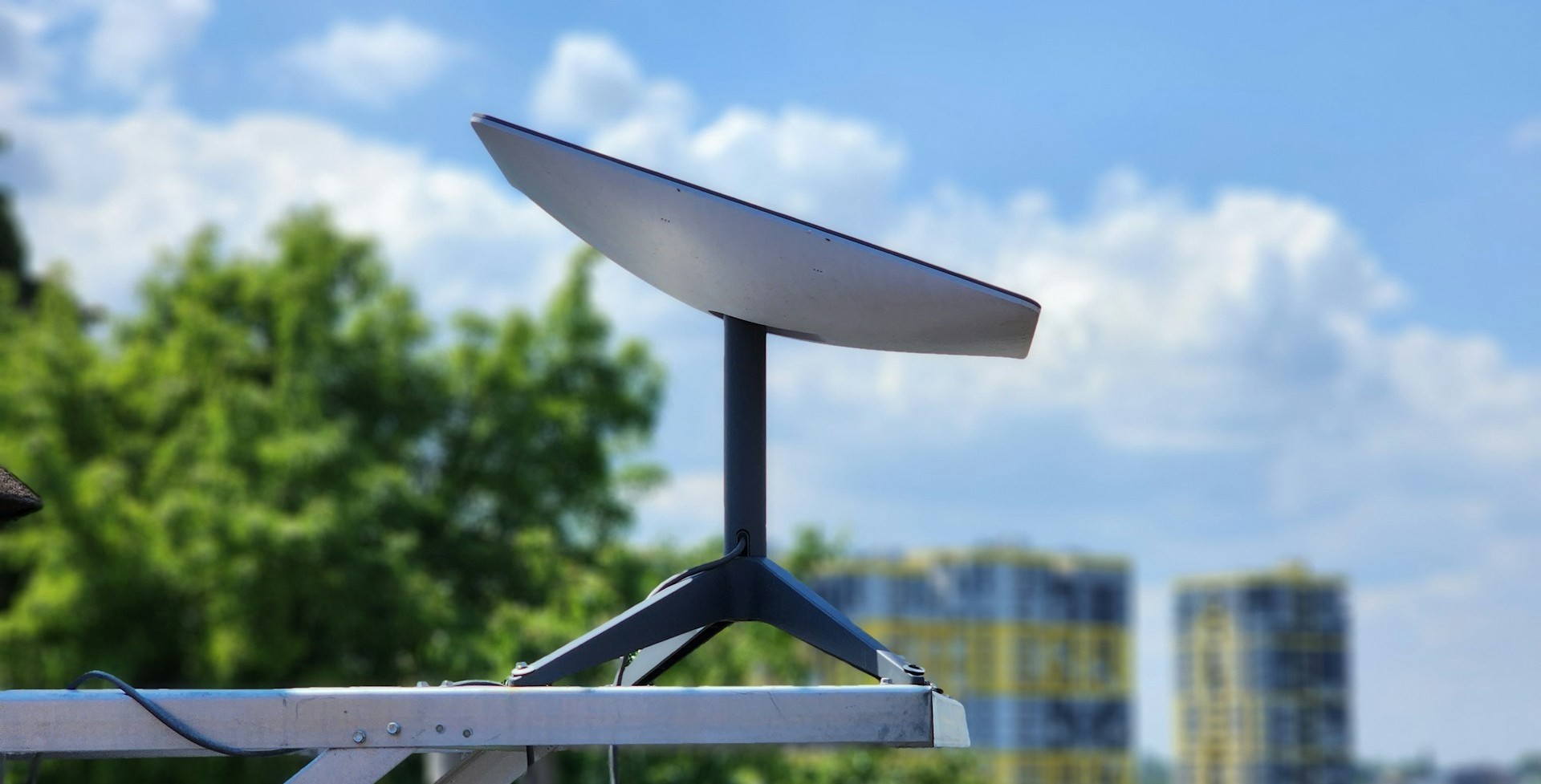
In a recent Fox & Friends interview, Iranian activist Ahmad Ahmadian described a country cut off from the wider web for more than a month. He said most people in Iran remain disconnected, while a small number of smuggled Starlink devices have become one of the few paths left to the outside world.
That leaves a hard truth at the center of the story: when the state controls the wires, even a satellite dish can start to look like a lifeline.
What Ahmad Ahmadian says is happening to internet access in Iran
Ahmad Ahmadian, executive director of Holistic Resilience, told Fox News that Iran had been under a total internet blackout for more than 33 days. Fox introduced him as an Iranian national whose activism once led to imprisonment, and as someone who built a crowdsourced mapping website and app to help civilians.
His main point was simple and stark. He said ordinary internet access inside Iran had fallen to a tiny fraction of normal levels, leaving most of the country unable to communicate freely with the outside world. In the segment, Fox also cited a senior Israeli intelligence official who called the shutdown a “blackout on truth,” arguing that the regime was hiding the scale of what was happening inside the country.
This short table captures the core figures Ahmadian gave during the interview:
| Claim from the interview | What Ahmadian said |
|---|---|
| Length of the blackout | More than 33 days |
| National connectivity | About 1% of normal levels |
| Starlink devices in Iran | Tens of thousands, possibly more than 50,000 |
| Population reference | About 92 million people |
| Share still disconnected | Roughly 99.9% of people |
He argued that this kind of shutdown does more than block websites. It seals off daily life. Families struggle to reach each other. Activists lose channels for coordination. News from inside the country becomes harder to verify, harder to share, and easier for the government to bury.
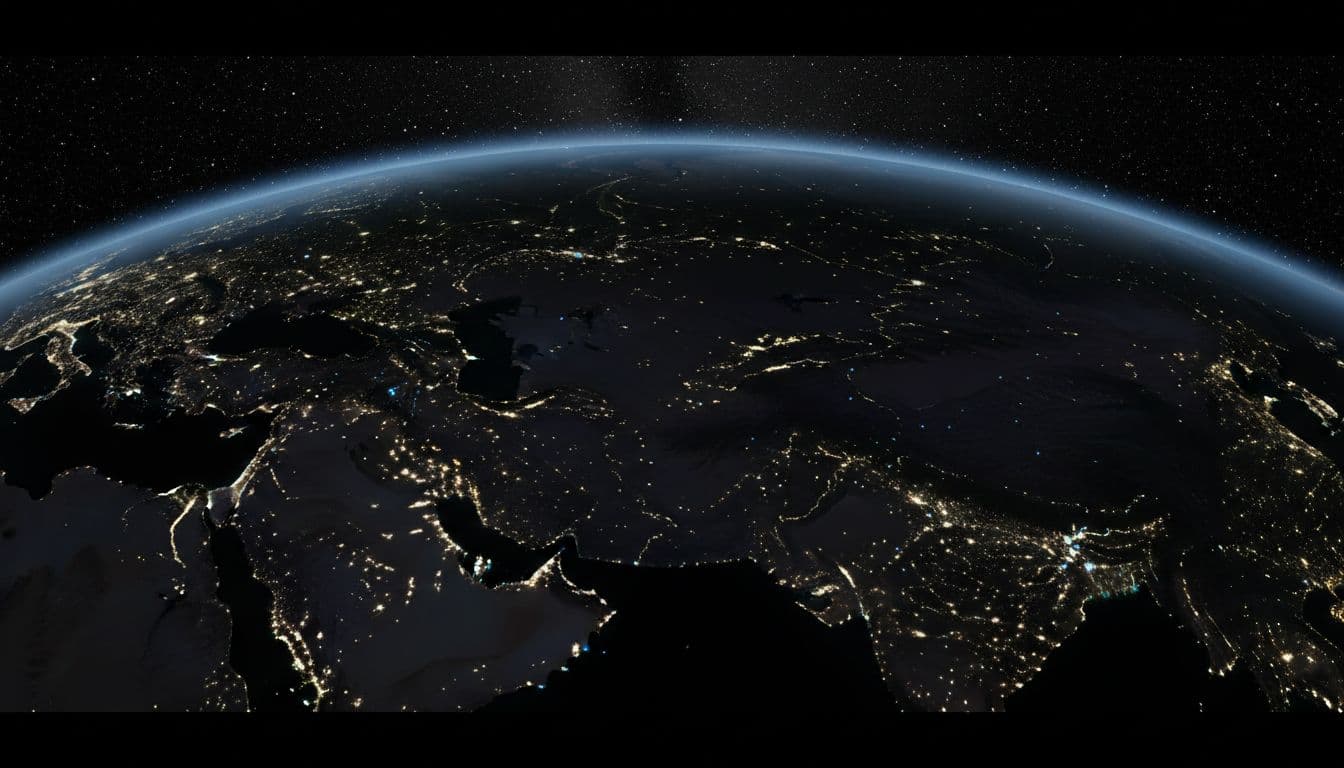
That’s why the blackout matters beyond telecom policy. When a government narrows the flow of information to a trickle, it can shape what citizens know, what the outside world sees, and how long fear can hold.
An internet blackout is never only about bandwidth. It’s also about who gets to tell the story.
Why Starlink has become the main way around the blackout
Asked what could be done “cyberwise” to get Iran back online, Ahmadian’s answer was direct: Starlink. In his view, the satellite service is the one option the government has struggled to fully shut down.
That does not mean it is easy to use. Ahmadian said the devices are smuggled into Iran by people acting at great personal risk. He also said the hardware remains expensive, often selling for thousands of dollars inside the country. Even so, he described a growing effort to build a form of government-independent internet access, one that does not depend on local telecom networks the state can switch off.
He added that subscription costs had become less of a barrier after, as he put it, those fees were waived earlier in January. Still, the larger problem remains the same: getting enough terminals into enough homes.
Later reporting has echoed parts of that picture. IranWire’s report on smuggled Starlink devices described how people have tried to bypass state controls despite legal and financial danger. NPR’s coverage of how videos and images get out of Iran also explains why satellite internet matters so much during a shutdown.
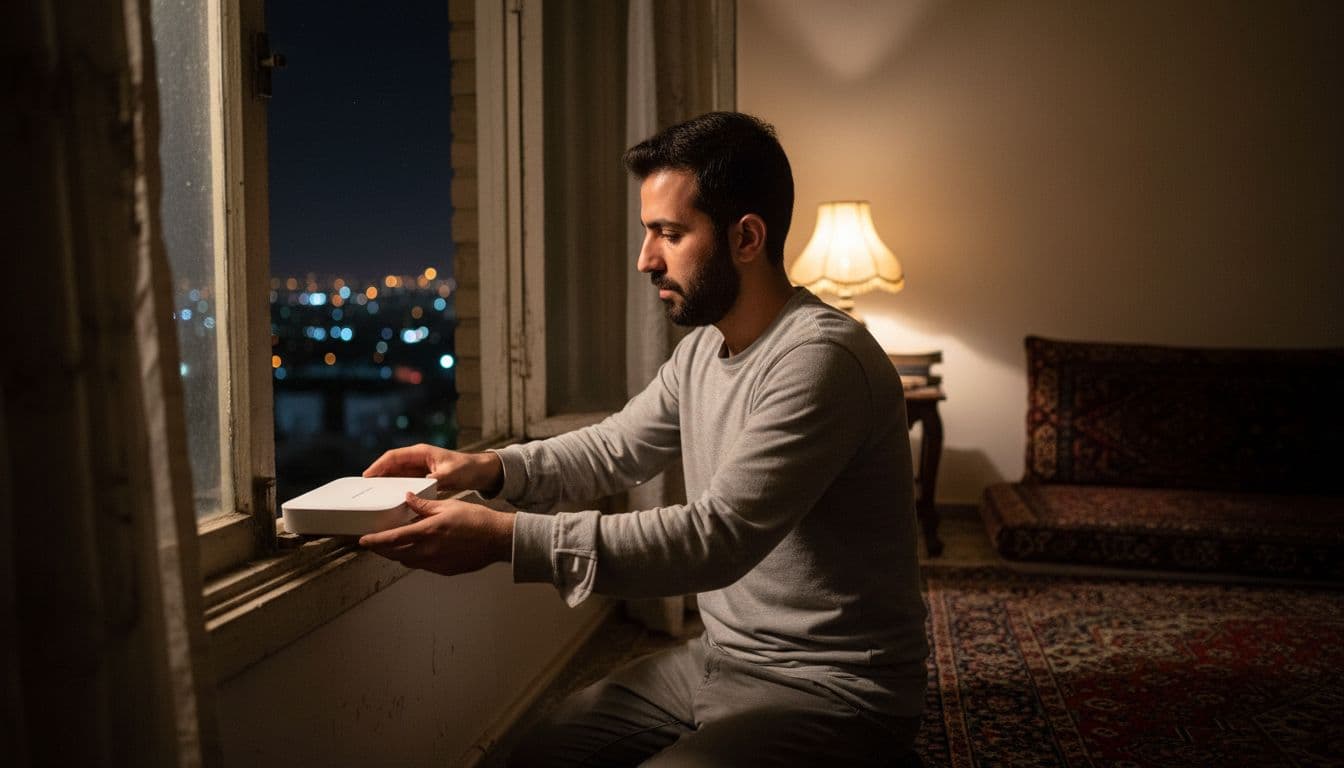
The image that comes through from Ahmadian’s remarks is almost cinematic. A country goes dark online, and then, one by one, small dishes appear behind curtains and on rooftops. They do not reconnect the whole nation. Not even close. But they create openings, and openings matter.
By his estimate, even tens of thousands of terminals reach only a sliver of the population. Still, he argued that these scattered connections are the reason any information is leaving the country at all.
Why the blackout matters for protests, coordination, and public fear
Ahmadian also tied the internet shutdown to a broader question: why there has not been a larger uprising. His answer was not that people had accepted the situation. It was that people need to connect before they can coordinate.
He said many Iranians see signs that the regime’s apparatus of repression has weakened. In the interview, he referred to attacks on bases, militia centers, and checkpoints during the early phase of a recent military campaign. His argument was that outside force alone cannot finish the job. If change is going to come from within, people inside the country need the ability to organize quickly and safely.
That’s where connectivity becomes political. A protest is not only a crowd in a square. It starts much earlier, with messages, updates, location sharing, warnings, and trust. Turn off the network, and you don’t erase public anger. You make it harder for people to move at the same time.
State television can keep broadcasting inward while the public loses its outward voice. That imbalance matters. One side still speaks. The other side struggles to confirm what is happening even a few neighborhoods away.
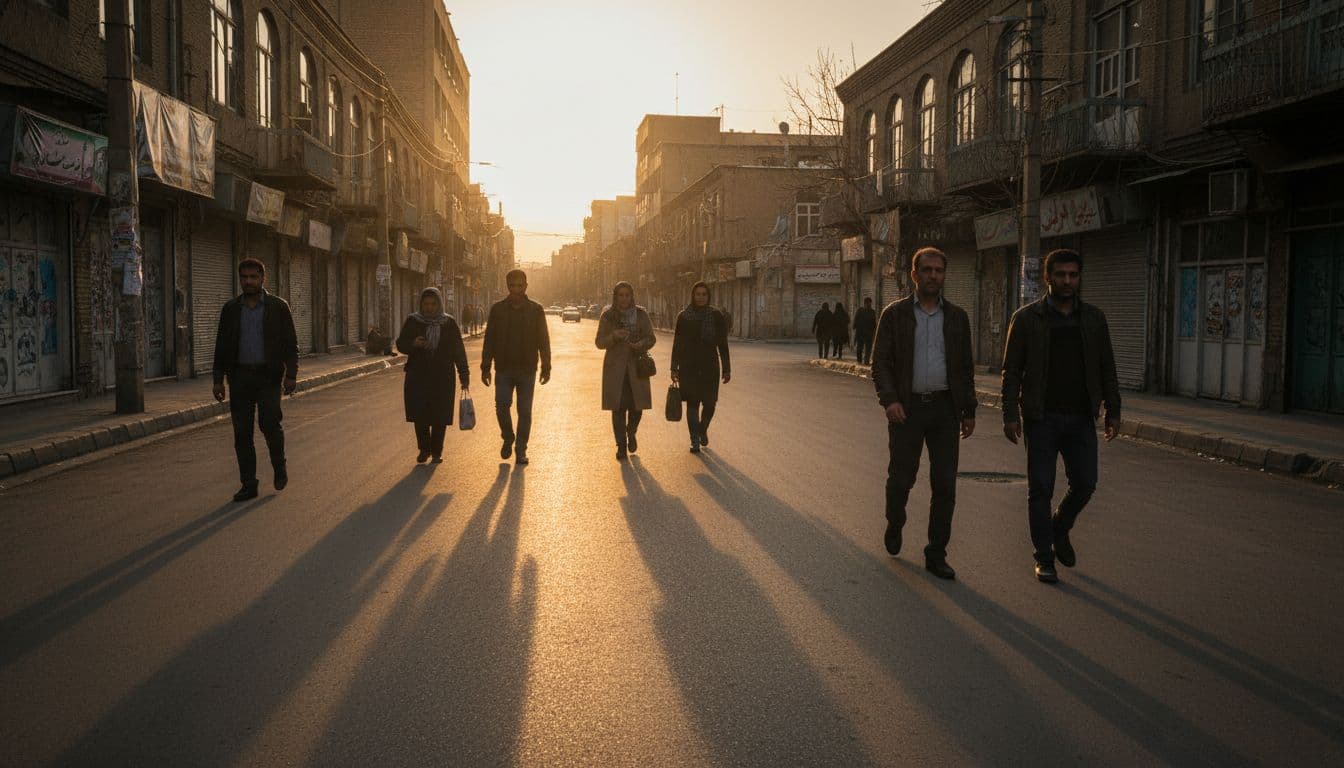
Ahmadian framed American technology as a weak point for the Iranian government. In his telling, the state can police streets, checkpoints, and local service providers, but satellite-based communication is harder to choke off. That does not solve everything. It does, however, give people a way to signal, witness, and respond.
Near the end of the segment, the discussion landed on a blunt idea: flood the zone with Starlink receivers. The phrase sounded simple. The reality behind it is not. Yet the logic is easy to follow. If repression depends in part on isolation, then every extra connection reduces that isolation a little.
The risk of getting online can be as high as the risk of protesting
The interview did not soften the personal danger. When asked whether people caught with Starlink might be killed, Ahmadian said yes. He also made a harsher point: in his view, people who protest openly face the same risk.
That comparison explains why some Iranians may still choose to hide a dish, share a connection, or help move equipment. If daily life already includes the threat of violent punishment, then the line between “too dangerous” and “worth the risk” begins to move.
Ahmadian compared Starlink terminals to satellite TV dishes in earlier years. Those were also restricted, yet enough people obtained them that the state could not fully stamp them out. His argument was that the same pattern may be emerging again. A banned device, once rare, becomes common enough that enforcement starts to fray.
There are signs that authorities understand the threat. The Jerusalem Post’s reporting on Starlink smuggling into Iran described both rising demand and confiscations. That fits the picture Ahmadian painted on air: the government sees independent communication tools as a challenge to control, not only as gadgets.
The risk also helps explain why the numbers stay small relative to Iran’s population. If a terminal costs several thousand dollars on the black market and can expose its owner to arrest or worse, widespread access is hard to build quickly. So while Starlink may be the strongest workaround mentioned in the segment, it remains a narrow bridge, not a national fix.
Even so, narrow bridges can carry a lot when the river below is closed to traffic.
What this blackout reveals about control, truth, and the fight to stay connected
The strongest idea in Ahmadian’s interview was not only that Iran’s internet is restricted. It was that the blackout appears designed to shape reality itself. If people cannot upload, verify, or compare what they are seeing, then official narratives face less resistance.
That is why this story reaches beyond one interview or one country. Internet shutdowns are often framed as technical events, as if a switch were flipped for neutral reasons. In practice, they can function as tools of power. Tech Policy Press’s analysis of Iran’s shutdown and Starlink explores that larger point, showing how control can sit in infrastructure, licensing, and access, not only in police action.
Ahmadian’s comments also carried a limit that matters. Starlink can help, but it cannot reconnect 92 million people overnight. It can move information through cracks in the wall. It cannot erase the wall on its own.
Still, the presence of those cracks changes the story. A blackout can hide a country for a while. It cannot erase the human push to reach outward, share what’s happening, and find one another again.
The deepest point here is hard to miss. Connection itself has become a form of resistance.
If Iran’s internet remains choked off, the question is not whether people want to speak. The question is how many paths remain open for them to be heard.