If you’ve searched for AT&T satellite internet, you’re probably picturing internet “from space” that reaches places cell towers don’t. That’s the right idea, but the most important detail is timing and scope.
As of February 2026, AT&T’s satellite effort is still in testing, and it isn’t something most people can sign up for yet. The current focus is on direct-to-device satellite connectivity that works with regular phones on AT&T’s network. In other words, think of it as extra coverage (or a backup) when you’re outside tower range, not a full replacement for dish-based home satellite broadband.
AT&T’s plan centers on its partnership with AST SpaceMobile, with a limited beta expected in the first half of 2026. AT&T has shared milestones and testing updates through its newsroom, including AT&T’s satellite progress overview, which frames this as a coverage extension built to integrate with its existing network.
Where AT&T satellite internet stands right now (February 2026)
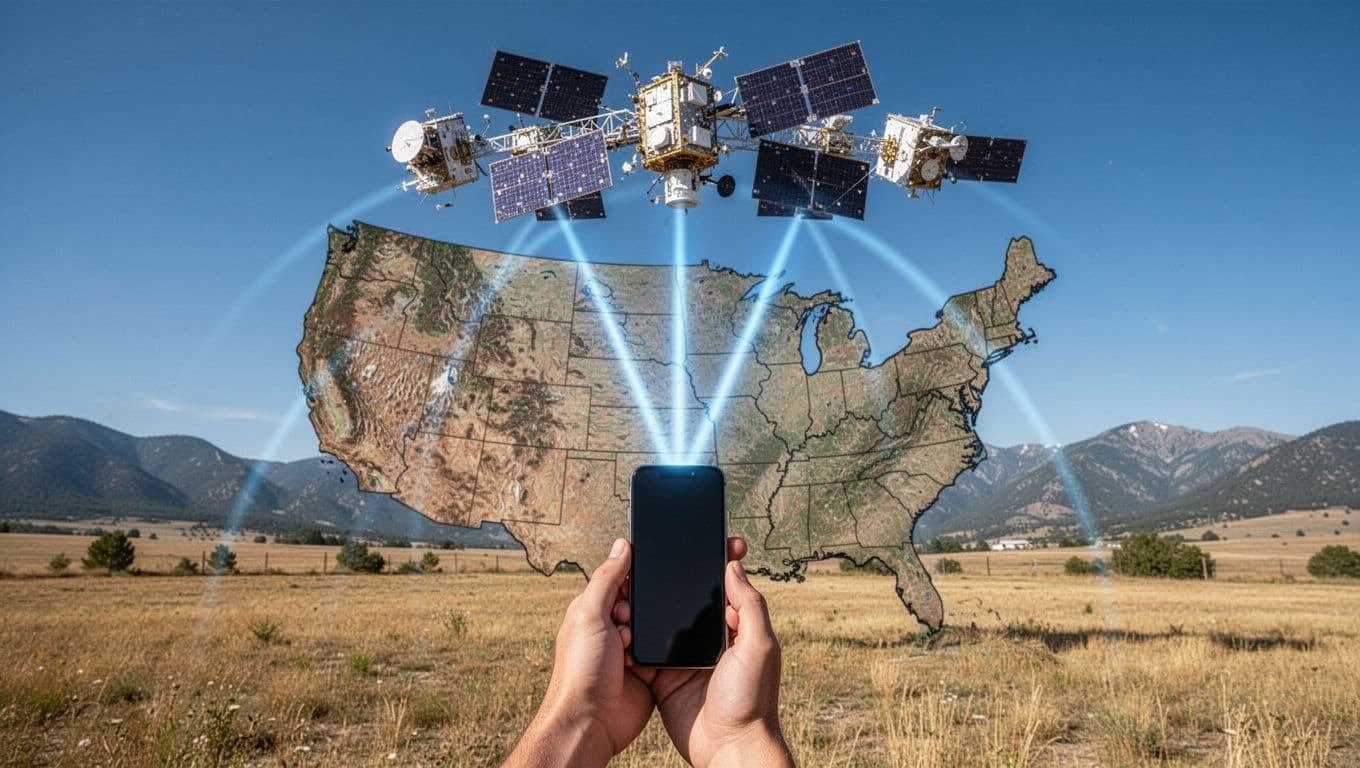 Low-Earth orbit satellites connecting to a standard smartphone in a rural area.
AT&T and AST SpaceMobile have moved beyond concept demos and into advanced testing, but this is still a pre-commercial service. A beta planned for the first half of 2026 suggests the system is stable enough for limited real-world use, yet not ready for wide release.
A “beta” matters because it’s not a launch. Companies use betas to collect performance data, find edge cases, and tune systems under real conditions. Features can change mid-test, and coverage can be patchy while more satellites and ground equipment come online.
Recent reporting points to key infrastructure coming together, including multiple gateway sites that connect satellite links back into the terrestrial AT&T network. For background on those milestones and the direct-to-cell buildout, see this recap from SatNews on the BlueBird 6 expansion update.
A beta is less like flipping a switch and more like a controlled field trial, it proves what works when the map says it should.
Who might get access first, and how to spot real updates
Early access will likely be narrow and practical. The first users usually have strong reasons to test coverage outside normal service areas, and they’re used to reporting issues.
Common early paths look like this:
- Invite-only beta groups: Some customers may get targeted invites tied to device models, plan types, or locations.
- Public safety and field testing: First responder workflows are a natural fit because they often operate in remote areas.
- Limited geographies: A beta might focus on regions with known tower gaps or areas near gateway coverage.
Because “satellite internet” attracts scams, treat any unofficial signup page as suspicious. A real program will come from AT&T channels and will include clear terms, such as supported devices, eligible plans, where it works, and how to opt in. Be wary of pay-to-join waitlists, fake “reservation fees,” or vague claims like “works everywhere today.”
What details are still unknown (pricing, speeds, and exact coverage)
Even with testing underway, big consumer details remain unannounced. Public information still does not lock down:
- Pricing (add-on fee, plan tier, or included benefit)
- Speed targets you can count on day to day
- Data caps or fair use rules
- A rollout map with dates by state or county
- How voice and video will behave under load
That silence is normal at this stage. Satellite-to-phone performance depends on satellite density, gateway reach, and real traffic patterns. Providers usually wait until they see stable results before publishing hard numbers.
When AT&T does share consumer terms, look for practical metrics, not just peak claims: expected download and upload ranges, latency expectations, what happens in congestion, and whether service starts with messaging before broader data use. Some mainstream coverage has echoed the “beta first” message while still leaving open questions, including this report on AT&T’s new satellite service push.
How AT&T satellite internet is expected to work on a regular phone
 Direct-to-device satellite coverage in an open-sky rural setting.
The simplest way to picture this is as a new “last-mile” path for your phone when towers disappear. Your phone talks up to a satellite in low-Earth orbit. That satellite then routes traffic down to a ground gateway station. From there, data flows into AT&T’s core network like normal.
In this model, the satellite link is part of AT&T’s network, not a separate home internet provider. That’s why people often call it “satellite-to-cell” or “direct-to-device.”
As of the latest test milestones, AT&T has referenced four ground gateway stations supporting this setup. Those gateways are a big deal because satellites need a place to hand off traffic at high capacity. More gateways and more satellites typically mean better coverage and better odds of a stable link.
The goal is straightforward: keep you connected in dead zones, such as remote roads, mountain corridors, desert work sites, and some offshore edges. It also helps during outages when towers fail, although emergency use depends on how the final service and priority rules are designed.
The role of AST SpaceMobile and the big satellite antennas
AST SpaceMobile’s approach depends on satellites with very large antenna arrays. You don’t need to memorize antenna specs to get the point. A normal phone has a small antenna and limited transmit power. That makes space links hard.
A bigger antenna in orbit acts like bigger “ears.” It can hear weaker phone signals, and it can send a signal that a phone can receive without special hardware. That’s the heart of the promise: connect unmodified smartphones using spectrum and network integration, rather than asking customers to buy a new satellite handset.
Industry coverage has followed the partnership and timeline closely, including this overview of AT&T’s 2026 satellite plans. Even so, the real test is how consistent the link feels when you’re actually outside with trees, hills, and motion.
What you can realistically do with it at first
Early phases of direct-to-device satellite service usually prioritize reliability over speed. That means basic needs first, then broader capability as the system proves itself.
In practice, expect initial use cases like:
Checking in during a hike. A short message that confirms you’re okay is valuable when there’s no tower for miles. The same applies to remote job sites where crews need to send updates or coordinates.
Handling a roadside breakdown. If you’re on a rural highway with no bars, a working link for messaging and basic data can help you contact help or share your location.
Keeping work moving. Field techs, survey crews, and utility teams often need to submit status notes, photos, or work orders from fringe areas. Even limited data can save a return trip.
AT&T and AST have talked about broader capabilities (including voice, data, and video during testing), but it’s smarter to treat that as “possible,” not “guaranteed on day one.” Links in motion, like in a vehicle, also add complexity because the phone and satellite must keep a stable connection as geometry changes.
Limits to plan for (line of sight, weather, congestion, battery)
Satellite links don’t behave like strong mid-band 5G near a tower. Some limits come from physics, and others come from shared capacity.
Open sky still matters. Trees, canyon walls, and dense buildings can block or weaken a signal. If you’ve used GPS in a city street canyon, you already get the idea.
Weather can reduce link quality. Rain, heavy cloud cover, and storms can add loss and noise, depending on frequency and link budget. Systems can compensate up to a point, but performance can still drop.
Congestion is real. A satellite covers a broad area. If many users try to connect at once, speeds can fall, and connections can take longer to establish.
Battery impact can show up in weak-link conditions. When a phone works harder to hold a link, it may burn more power. Large satellite antennas can help, yet there’s no free lunch when the radio path is long.
A good rule: treat direct-to-device satellite as a “get connected” tool, not a “stream anything anywhere” promise. If it works better than that later, you’ll be pleasantly surprised.
Should you wait for AT&T satellite internet or choose another option today?
If you’re deciding based on hope alone, it’s easy to end up stuck with bad internet for another year. A better approach is to match the option to the problem you’re solving.
AT&T’s satellite path looks best as a phone coverage extender. It can help when you already like AT&T service, but you keep hitting gaps. On the other hand, if you need full home broadband right now, direct-to-device satellite won’t solve that in early 2026. Home broadband needs consistent capacity for multiple devices, indoor coverage, and predictable performance.
Also, keep language straight. Many people say “satellite internet” and mean home internet with a dish. AT&T’s current effort is closer to a network feature for mobile service. That difference affects cost, hardware, and expectations.
Financial news and tech reporting have also emphasized the beta timeline and the competitive push behind it, including this piece on the satellite-to-phone beta setup. Still, your decision should rest on what you need this month, not what might arrive later.
Good fit if you need coverage in dead zones, but already like AT&T
Waiting makes sense if your pain point is simple: your phone works in town, but it fails on the edges. That pattern is common for:
Road trippers who lose service on long stretches of highway.
Outdoor workers who move between job sites and remote areas.
Rural drivers who live near coverage boundaries.
Families who want a safety net for check-ins when traveling.
In those cases, AT&T satellite connectivity could feel like an invisible backup. The value is not just speed; it’s the ability to get a message out when towers drop away. If the beta expands and device support matches what you carry, the upgrade path could be easy because it stays within AT&T’s ecosystem.
Better choices if you need home internet right now
If your household needs a primary home connection, you should shop based on what’s available today. Direct-to-device satellite won’t replace a home router in early rollout. Even later, it may stay positioned as a mobile extension.
Compare options on factors that change daily life:
Installation and hardware (dish, modem, external antenna, or none).
Monthly cost and contract terms.
Data policies and how throttling works.
Latency for gaming and video calls.
Support quality and outage handling.
Besides satellite home internet, check fixed wireless providers in your area. In some rural pockets, fixed wireless can beat satellite on latency and stability, if you have a line of sight to the provider’s site. If you can’t wait, choose what meets your needs now, and reassess AT&T satellite once pricing and coverage are published.
Conclusion: the practical takeaways for February 2026
- AT&T satellite internet is still testing, and most customers can’t sign up yet.
- A limited beta is expected in the first half of 2026, so access will be selective.
- The system is built with AST SpaceMobile and is designed to connect regular phones.
- It’s meant to extend coverage, not replace dish-based home broadband.
Next steps: watch for device compatibility announcements, verify any beta invite through official AT&T channels, and compare home internet options if you need service immediately. Once AT&T publishes pricing and coverage details, you’ll be able to judge whether AT&T satellite internet fits as a backup link or a daily coverage booster.